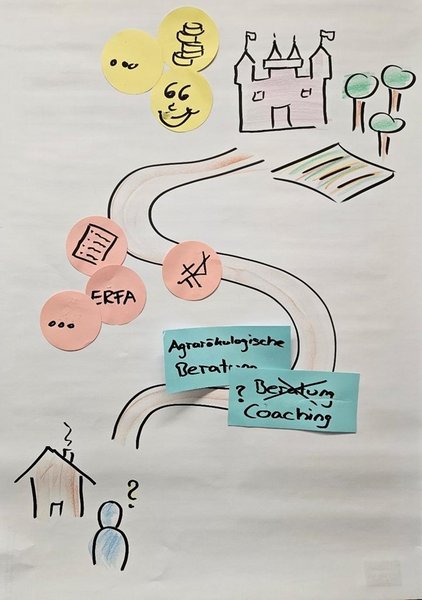
Objectives of the Training
The training emerged from the shared need of multiple projects to establish a platform for exchanging knowledge on agroecological and holistic farm advisory services. At the national level, several initiatives are currently focused on networking and knowledge-sharing related to comprehensive, strategic, and agroecological consulting.
The primary goal of this training was to provide advisors from diverse backgrounds with a space to exchange insights and collaboratively develop approaches for agroecological advisory services.
Content
The session began with an introduction round, where participants shared their experiences and perspectives on agroecological advisory services. The core discussion topics included:
- Exchanging experiences and identifying needs in agroecological advisory services in Switzerland.
- Recognizing gaps and potential areas for action in agroecological consulting.
- Establishing the foundations for a regular exchange of experiences and developing supporting tools.
To tap into the existing knowledge of experienced advisors in complex strategic and agroecological consulting, the “appreciative interviews” method was used. Participants reflected on key guiding questions:
- What constitutes a successful agroecological advisory service?
- How have strategic topics been addressed, and how have farmers been involved?
- What resources are necessary to provide effective advisory services?
Challenges and Recommendations
During the discussions, participants emphasized the importance of understanding agroecological advisory services as a holistic process.
- Advisors should meet farmers where they are and support them step by step. Agroecological transformations and strategic farm consulting require long-term engagement, patience, and gradual implementation to avoid overwhelming farm operators.
- It was also noted that farm succession and construction planning can serve as valuable entry points for introducing agroecological measures.
- Advisors must carefully assess both the motivation and limitations of farm managers before proposing solutions.
Additionally, experienced advisors were asked to share their key insights for newcomers in the field. They highlighted the importance of authenticity in advisory services—advisors should trust their own experiences, develop a personal consulting style, and openly communicate any knowledge gaps or limitations. If necessary, they should refer clients to partners within their professional network. Furthermore, follow-ups after advisory sessions were identified as an effective way to demonstrate genuine interest and strengthen relationships with farm operators.
Future Prospects: Strengthening Agroecological Advisory Services in Switzerland
A major discussion point was how to ensure the long-term implementation of agroecological advisory services in Switzerland. Several approaches were explored, including:
- Coaching Network for Agroecology: The idea of creating a network of experienced professionals to foster knowledge exchange and support new advisors.
- Advisory Guide for Agroecology: The development of a structured advisory guide that integrates insights from existing consulting practices, including lighthouse farms, working groups, and peer-to-peer advisory approaches.
The training sessions marked the beginning of an agroecological advisory network in Switzerland. Discussions revealed a strong community of engaged professionals willing to share their knowledge, skills, and experiences. Additionally, the growing number of projects and increasing demand for advisory services confirm the need for continuous collaboration and development in this field.
 tap and then scroll down to the Add to Home Screen command.